Description
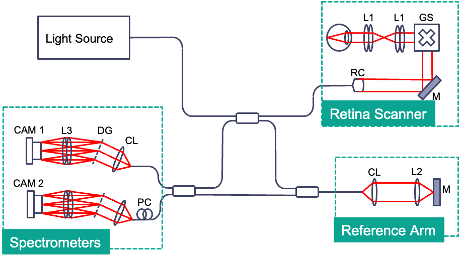
A-scan rate of SD-OCT system is limited by the maximum frame rate of the camera within spectrometer (250 kHz in our case). We implemented multi-spectrometer configuration at the detection part to speed up the A-scan rate of SD-OCT (up to 500 kHz for two spectrometers).
System Design
Optical switch or fiber coupler is used to direct the detected light into individual spectroemter.
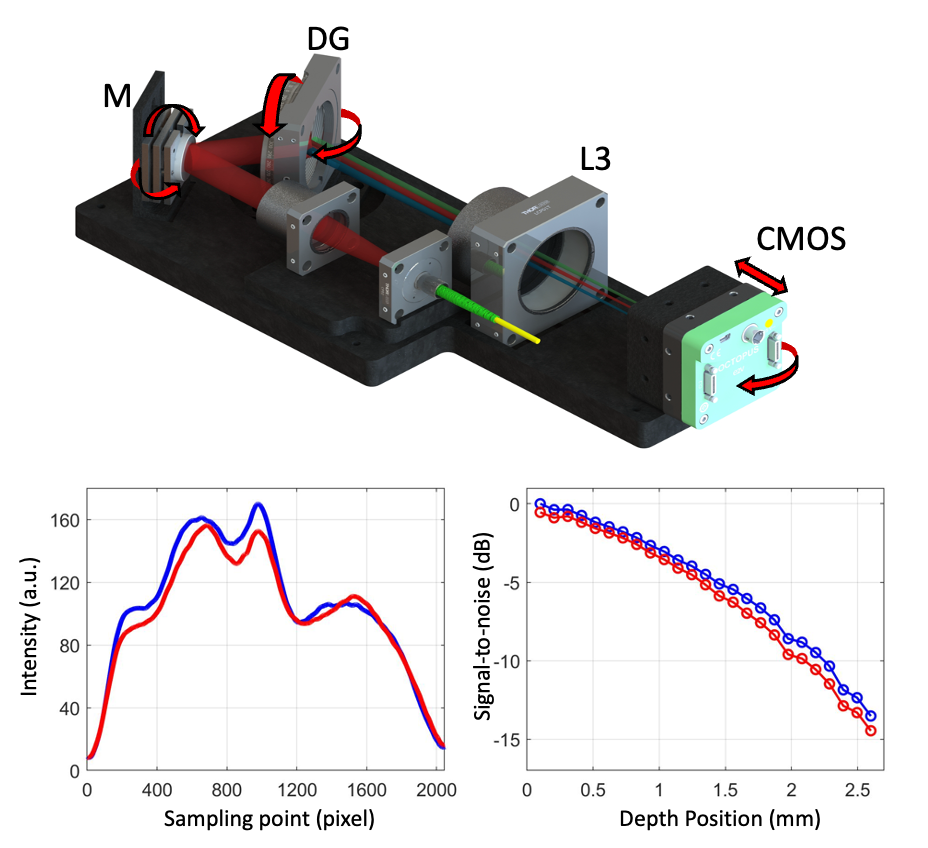
Spectrometer Alignment (Mechanical)
Mechanical alignment of two OCT spectrometers can match the performance
But….
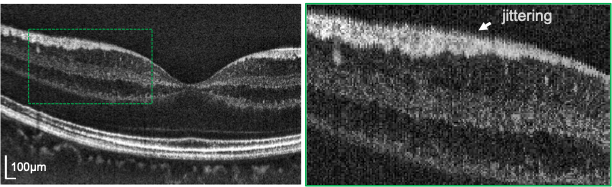
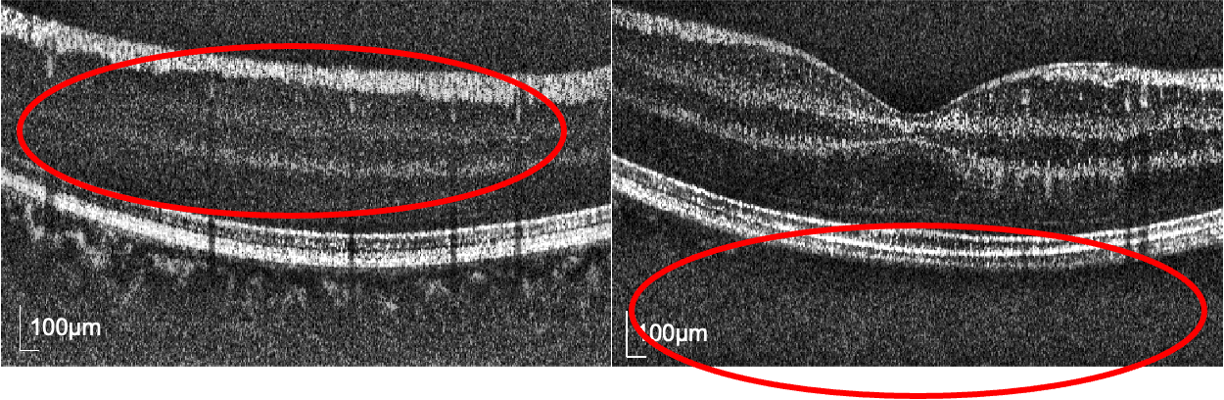
Small mismatch in the pixel can cause image artifacts
Depth positon mismatch (High-speed mode)
Signal washout (Dual balanced detection mode)
Computational Approach #1
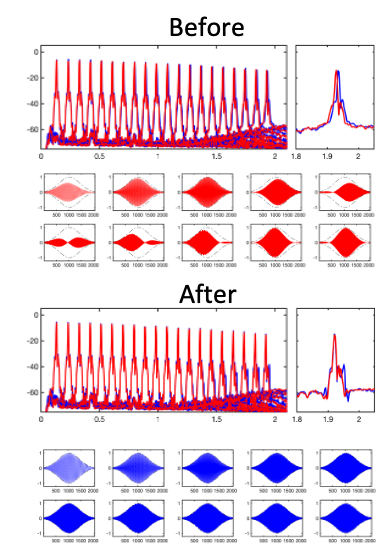
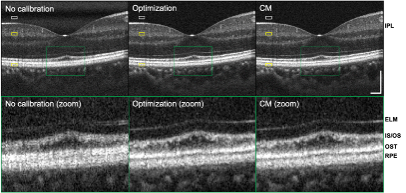
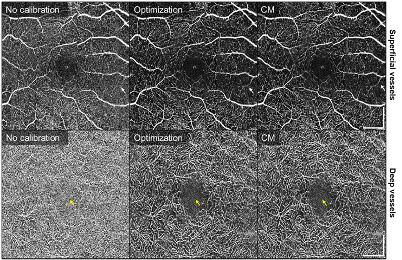
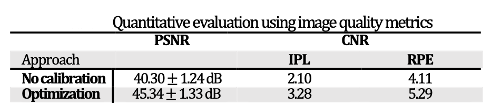
A set of calibration mirror data is used to transform target spectrometer signal to reference spectroemter signal. Cost function is set so that sum of the target and reference spectrometer signal are maximized.
Computational Approach #2
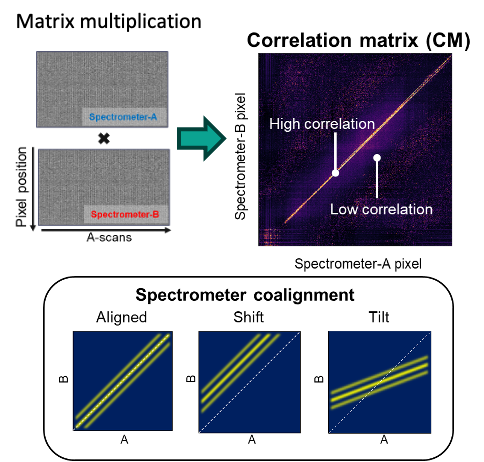
This approach derive the correlation matrix based on the actual image data acuiqred from dual spectrometer OCT imaging system. Compared to the previous optimization appraoch, it is a single-shot approach and can be used to guide the mechanical alignment.
Results
Reference
- Numerical calibration method for multiple spectrometer-based OCT system,” Biomedical Optics Express (2022)
- “Image-based cross-calibration method for multiple spectrometer-based OCT,” Optics Letters (2022)